Key takeaways:
- AEO is no longer a future concern. Senior leaders are past the “why” and focused on the “how,” navigating org design, measurement gaps, and content strategy.
- Diagnostic work is the fastest path to alignment. AEO leaders who show where their brand was missing or inaccurate in AI responses unlock budget, cross-functional buy-in, and a clear starting point.
- Better content discipline is becoming a competitive advantage. The teams pulling ahead aren’t publishing more, they’re maintaining content that’s clearer, more credible, and more useful to both people and AI systems.
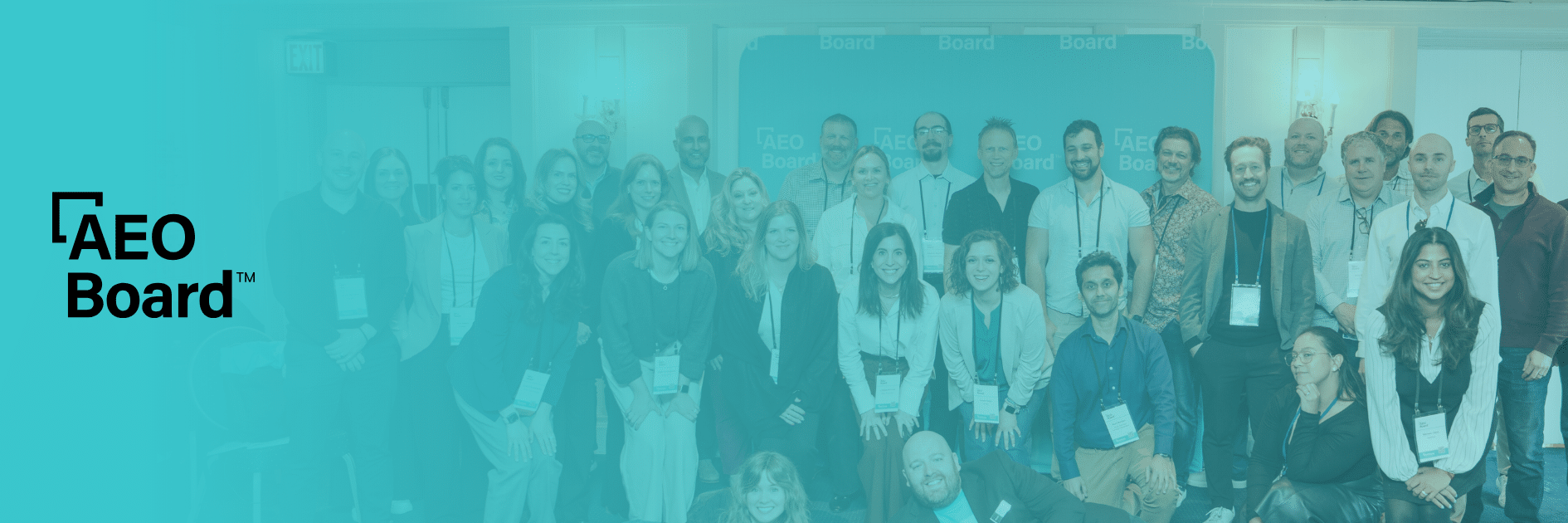
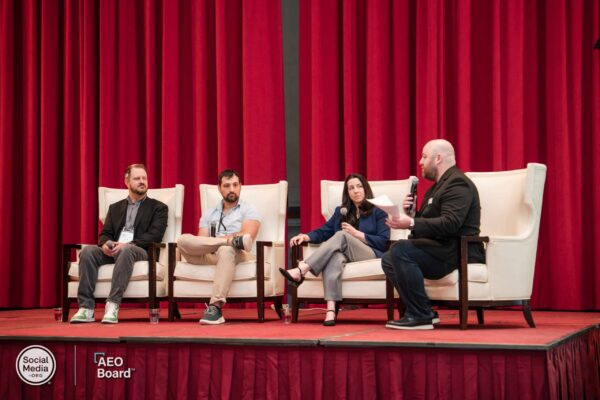
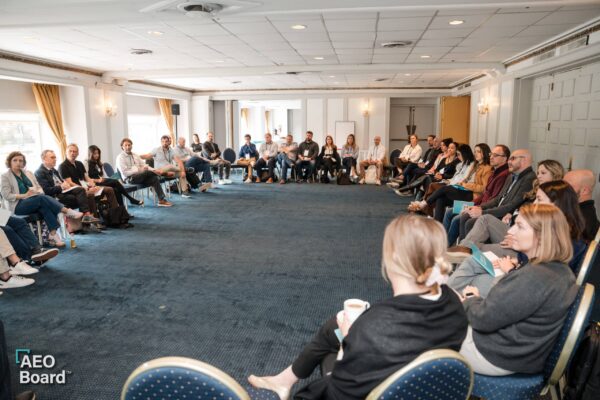
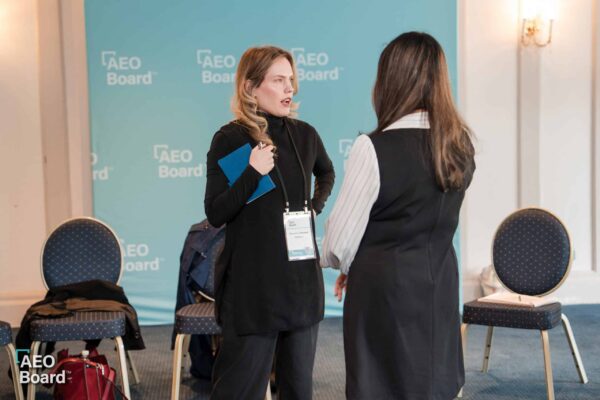
Senior AEO, SEO, and brand visibility leaders from the world’s largest enterprises gathered in Chicago for the AEO Board Founders Summit.
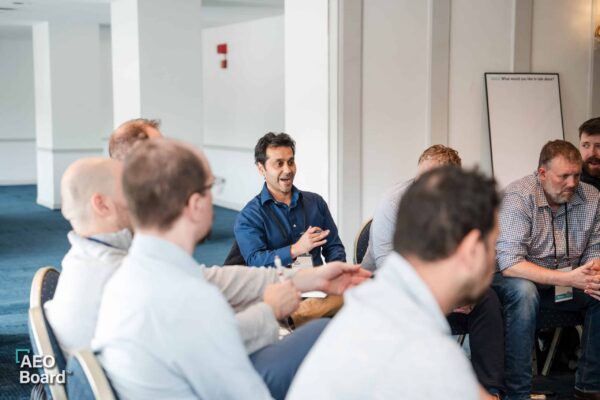
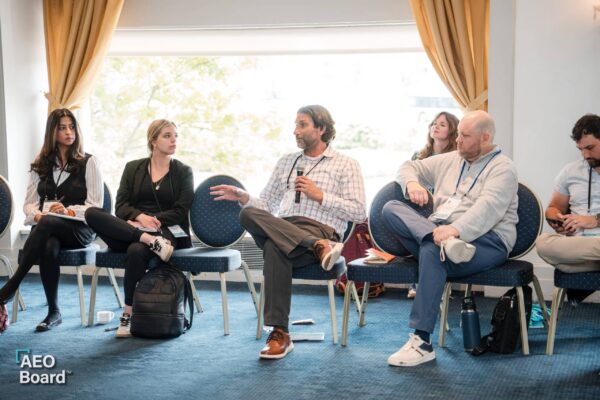
Practitioners representing 35 companies — including Zebra Technologies, Salesforce, Securian Financial, Northwestern Mutual, Astellas Pharma, and more — spent a full day in confidential peer discussions, hands-on vendor clinics, and a private Founders dinner.
No sponsors on stage. No vendor pitches. No polished case studies from three years ago.
Just real conversations, and there was a lot to talk about. Here’s what we uncovered for the future of AEO.

AEO Leaders Aren’t Debating the “Why” Anymore
The biggest signal from the day: this group wasn’t debating whether AI search matters. That question is settled. What they came to work through was harder — how do you actually make progress when the playbook doesn’t exist yet?
Who needs to own this? What do you fix first? What can you measure responsibly — and what are you overselling to leadership when you report it? How do you build alignment across teams that weren’t designed to work together on this?
Those are the questions that filled the room. And the fact that senior leaders are all wrestling with the same ones — right now, in real time — is exactly the kind of intelligence that doesn’t show up in agency reports or conference keynotes.
Nobody Has Figured Out Where AEO Lives Yet
The first discussion of the day surfaced something most AEO leaders already know but rarely say out loud: the function doesn’t have a natural home.
Across the room, our members described AEO sitting in SEO, digital marketing, search, corporate communications, customer engagement, web operations, and — in more than a few cases — nowhere formally at all.
One member’s organization had no AEO function to speak of. Another described colleagues throwing content into ChatGPT and calling it AEO-ready.
What members agreed on: where AEO lands often depends on what problem you’re trying to solve. Brand visibility requires different ownership than product discoverability. And wherever it sits, the work immediately touches teams that weren’t expecting to be part of it — Content, PR, IT, Legal, Paid, Affiliate, and Sales Enablement.
The organizations making the most progress are the ones that built working relationships across silos — through AI task forces, weekly cross-team standups, “lunch and learn” programs, and shared AI value statements that give everyone something to align to.
Showing the Gaps Across the Business Help Improve the Case for AEO Investment
Getting leadership to fund AEO work is a shared pain point. The consensus from members who had cracked it: stop asking for budget based on potential and start showing them what’s broken.
Members described auditing what’s surfacing in LLMs for their brand, and what isn’t. One member found that only 3% of the content pulling into AI responses was created by their team. That one number changed the conversation with leadership immediately.
Another ran a benchmarking analysis across ten major brands, showing exactly where they led, where they trailed, and where they were invisible. Corporate Communications, Search, Web, and R&D all ended up at the table as a result.
Other framing that moved leadership:
- Tying declining organic traffic to measurable revenue impact
- Surfacing compliance and accuracy risk — wrong brand information in AI responses is a regulatory issue, not just a marketing one
- Positioning AI search as a future paid channel: if you can’t earn organic presence now, you’ll be buying it when the ads arrive (and one member noted OpenAI’s early ad pilot generated $100M in its first six weeks)
The urgency isn’t hard to establish. As one member put it: “Execs are being told ‘AI or you’re going to die.'” The challenge is making the ask specific, the gap visible, and the win credible.
AEO Governance: Don’t Build the Rules Before You Run the Experiments
Members shared different approaches to AEO governance, with one consistent theme: the most functional programs are integrating AI accountability into what already exists.
One member described building a “Responsible AI Working Group” that addresses when AI tools can and can’t be used, baked into existing operational controls. Another brought their AI task force directly into existing data governance and ethics structures.
One of our members shared they’re developing a full Center of Excellence — a technical roadmap, a prompt library, and a structured model that distinguishes the teams creating content from the teams distributing it.
One sharp piece of advice from one of our members, who tried and disbanded COEs too early: don’t build the governance infrastructure before you know what you need. Run projects first. Let the framework emerge from what you learn in practice.
AEO Measurement Is Useful And It Needs a Lot of Context
The afternoon opened with one of the most honest conversations of the day: nobody fully trusts their AEO metrics yet.
Prompt volume is opaque. Citation data is inconsistent across platforms. Different tools produce wildly different visibility scores for the same brand on the same query.
One member built an executive report based on a platform that ranked their brand #1 — then ran the same query through a second vendor and landed near the bottom. Members said they are measuring directionally, not definitively, and getting ahead of leadership before the KPI conversation happens.
Several members have stopped reporting organic clicks entirely. What replaced it is a harder, more honest set of questions — whether the right audiences are finding the right content, whether they’re doing something when they get there, and whether any of it is moving the business.
One member shared that since implementing a jobs-to-be-done content program, their monthly search impressions grew from roughly 7–10 million to over 80 million. One company in the room lost 42% of organic traffic, and reported zero change in conversion rate.
What’s Actually Working in AEO Content and Tech
Members got specific about what’s moving the needle and what they’ve left behind.
Content approaches that are producing results:
- Lead H1 headings with action verbs: Users prompt with what they’re trying to do, and LLMs follow that intent
- Put the answer at the top of the page: LLMs stop crawling if you don’t lead with relevance
- Build in FAQs, Q&A structures, comparison tables, and anchor-linked tables of contents
- Add published and last-reviewed dates: Recency signals matter
- Credit authors with relevant credentials: LLMs weight MDs, PhDs, and domain experts higher
- Structure YouTube chapters around questions, not topics
- Invest in infographics and video: Both are increasingly pulled into AI responses as citations
What they’re moving away from:
- Massive “ultimate guide” content built for old SEO logic
- Marketing language that adds noise without signal
- PDFs buried in the site
- Videos without voiceover
The build-versus-buy debate wasn’t really a debate. Buy. The landscape is moving too fast to build competitively, and the members who tried mostly learned that the hard way.
What the room spent more time on was interoperability — how to connect what you’re buying, so the insights don’t live in silos across three different dashboards.
This Is Why the AEO Board Exists
The Founders Summit wasn’t just a good day of conversation. It was proof that this community fills a real gap.
AEO leaders are operating in a space where the playbooks are still being written, the vendor claims are still being tested, and the internal alignment work is still being done. The practitioners doing this work at large enterprises are navigating ambiguity, and most of them are doing it without many peers who understand the actual constraints.
The AEO Board is a confidential, vendor-free peer community for exactly those leaders: senior brand visibility practitioners at large enterprises who need more than conference keynotes and agency reports. Year-round access to the intelligence, relationships, and honest conversations that help you make better decisions in real time.
If you weren’t in the room in Chicago, the community is open. Join your peers today to get ahead of the future of AEO.